Image
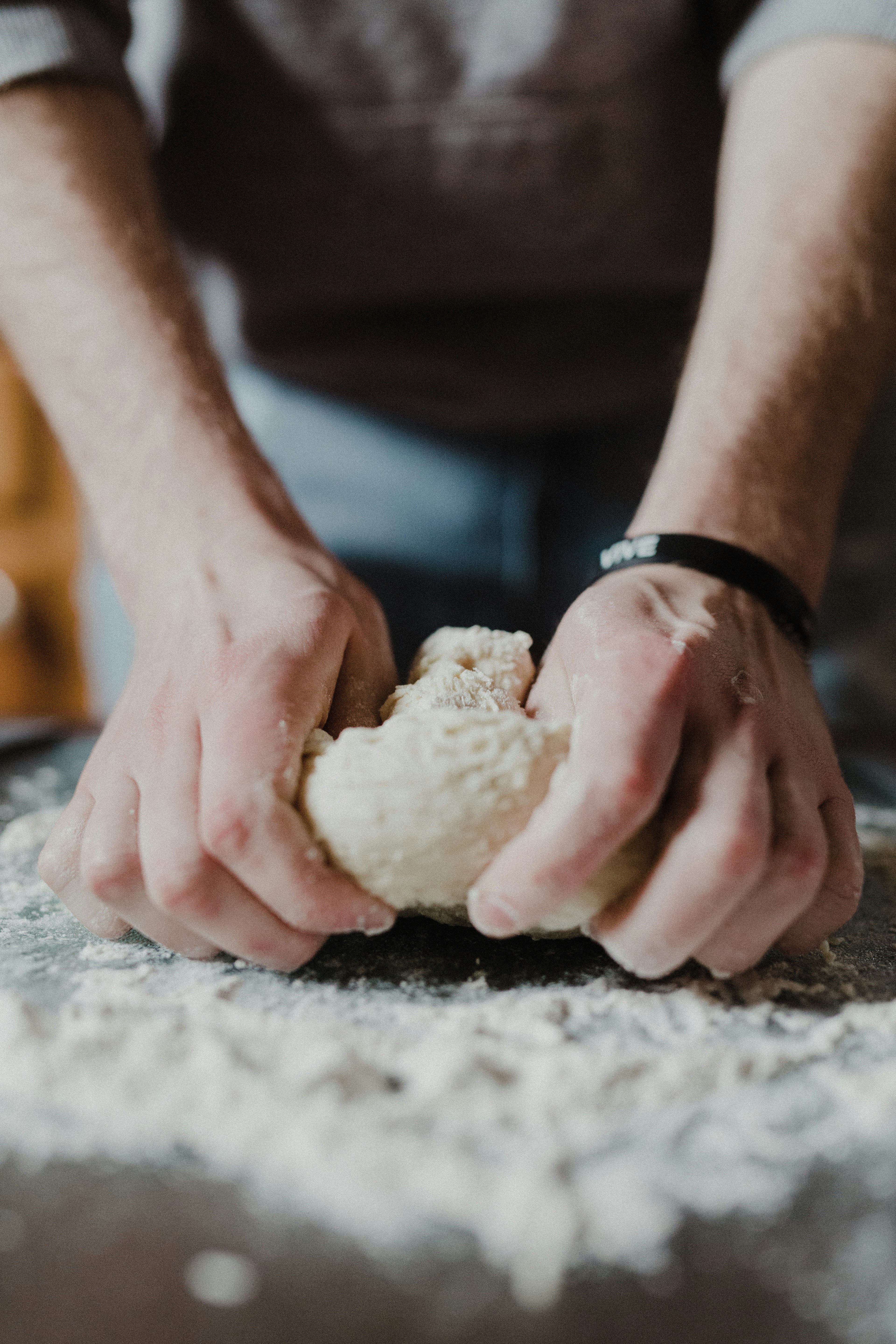
It is a surprise to me and to all my siblings to find the next generation in our family so engaged in the science and art of food preparation. When the eight of us were growing up, we ate largely for the sake of survival rather than pleasure. Given our family size, meals tended to be noisy and chaotic and involve things like canned asparagus, spaghetti, and, on occasion, something my dad called “Valentine burgers,” which meant that the Weber kettle had burnt the outside of the hamburger black while the inside was still red.
Several of my siblings have turned into (or married) very fine chefs, but the kids we are raising have upped the ante (or at least upped this auntie). Most of my nieces and nephews started their culinary adventure during Covid when, stuck at home, they took free reign of our kitchens. But the lead instigator has been my niece Lily who started messing with yeast much earlier in life, attending atrium at the age of three. She picked up the wooden spoon as part of a meditation on the parable of the leaven (Matthew 13:33) and has not put it down since. She is now studying the science of food in college and interning with a bakery.
And even though I am the one with a doctorate in preaching, she is the one who understands this parable of the leaven far better than me. She gave me an advanced lesson this past week by letting me know that yeast, while a living organism, is neither a plant nor an animal but a fungi—a category of Eukarya alongside plants, animals, and protists (don’t know what that is) that has cell walls made of chitin. Interestingly, chitin is the same material found in insect exoskeletons and crustacean cells. (Hope you enjoyed that additional fun fact from Claude because it is all I plan to say on the matter.)
More of interest to me is how yeast survives. Which is not on canned asparagus and spaghetti, but also not all that far off. It originally (and still can) grow in the wild on the skins of fruits like grapes, but also tree sap and other plant leaves, even floating in the air. Nowadays baker’s yeast and brewer’s yeast are mostly cultivated in labs and factories but have their genetic origins in a small number of wild yeast populations linked to oak trees and fruit in East Asia where they were domesticated by our ancestors thousands of years ago for beer, wine, and bread-making.
Baker’s yeast—Lily’s favorite—not only survives but thrives at 115 degrees Fahrenheit. At that temperature, you can add it to water and flour with some sugar, and it lives its happiest life. It bubbles and grows in size. The scent and texture change. Air pockets form in the dough.
“And then, how does it feel about the oven?” I asked. “You know, assuming fungi have feelings.”
“Well, in the oven, the air pockets get too hot and the yeast dies.”
“Well, that is a bummer. So, what do you think Jesus meant when he said that the Kingdom of God was like yeast?” I asked.
“I think that Jesus was saying yeast is an example of what a life well lived looks like. You live your best life. You bubble. You grow as much as you can. And then you die but you do it in such a way that you give your life to the bread. You leave something that means something. Your life was part of the greater work to make the loaf.”
You can tell maybe Lily should be rewarded degrees in both biology and theology. And I probably don’t need to add anything more here except that it was the homily I needed to hear myself this week.
This week, it has been 10 months since I was diagnosed with glioblastoma. Only about 40% of patients make it to a year. I think I am going to be one of those people. I’m doing well. I’m bubbling just fine. With the care I have received and am receiving, I might actually be living as close as I’ve ever gotten to 115 degrees in my lifetime. (I have meaningful stuff to do but also get a full night of sleep. I’m no longer racing around in a harried state all the time.) But only 20% of those with glioblastoma make it to two years and only around 5% make it to 5 years. Maybe I’ll be still bubbling at that point, too, and if so, I will feel grateful. But I want to also make sure I’m grateful if it ends up being less than that as well. I know that many of you also feel like you are probably in the closing years of life and want to attend to this era of life with intentionality.
I remember being five years old and waiting for my sixth birthday. There were six days before that party with kindergarten friends and each one of those days lasted an eternity. I also remember high school when I began to categorize time in longer blocks. I made a scrapbook of my senior year and there were four whole pages allotted for each month because just so much happened every week and it all needed to be recorded. When I started at Aquinas Institute each year of employment felt distinctive, and then it became decades. My 30’s were different than my 40’s were different than my 50’s. But if anything has happened in the past year it is that the story of life is in process of becoming one story. Rather than thinking of my life as a book with individual chapters, I find myself thinking of it as dough that will still have pockets of air in it, but is on the way to becoming one loaf. How will this bread, too, be for others? How will we, too, be a sign of the Kingdom of God?
Photo credit: Jeremy Yap