Image
This past week I asked the radiologist if some of my irritability and feistiness in the late afternoons might be caused by the radiation treatments I’ve been receiving. “Ummm. I think that only happens to the Hulk,” he replied.
Just wanting to double check, I asked, “So do you think I might be turning into the Hulk?” “Ummm. Probably not at this point,” he replied.
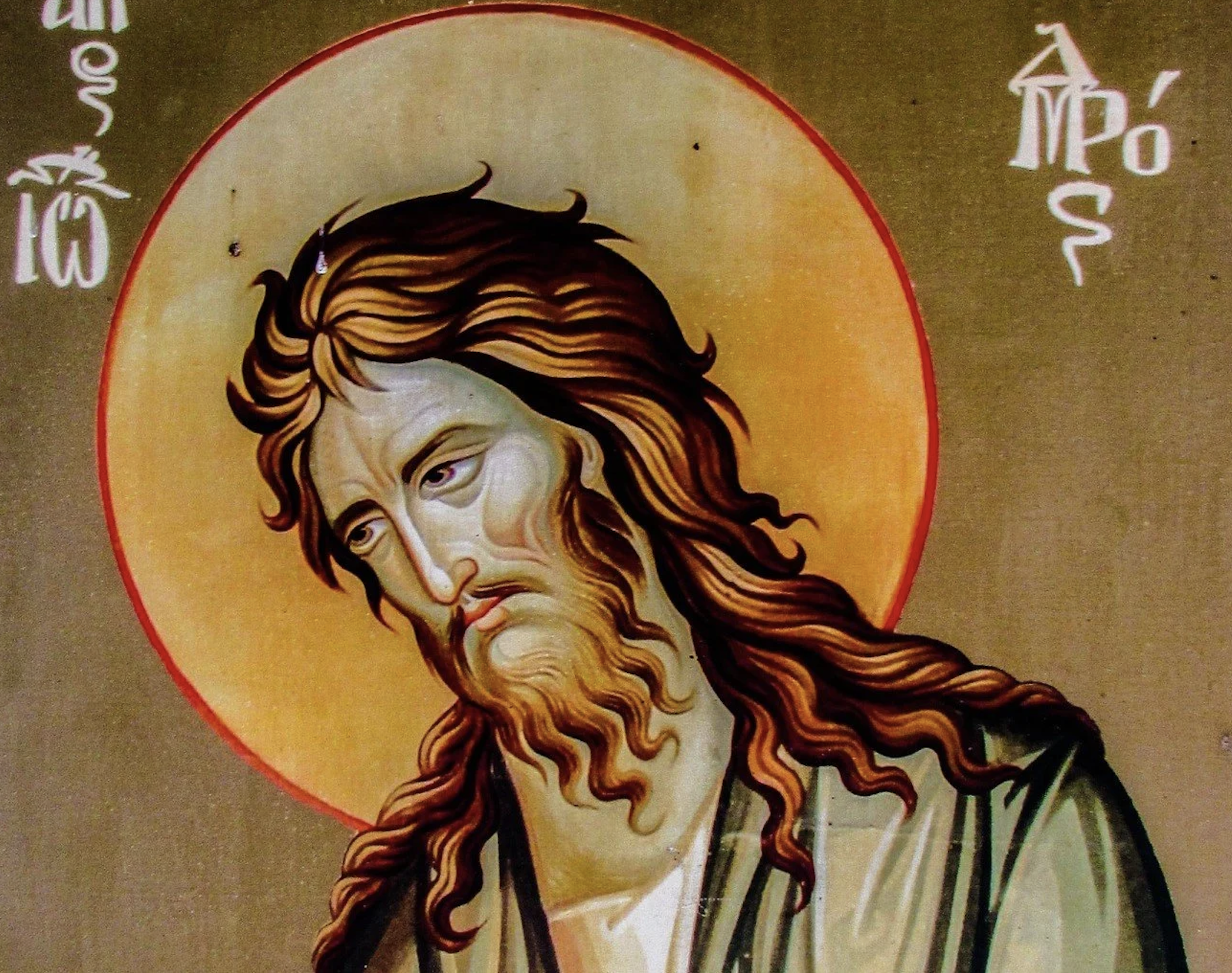
So… now we are back to blaming it on the anti-leprosy medication, or (as my husband likes to suggest) my fundamental personality, or my newest theory: the Second Week of Advent. This is the week that John the Baptist reappears every year. Maybe I’m just turning into one of those irritable and feisty prophets who tries to shine a flashlight on activities of their time that need light to shine on them so that we all can see more clearly what’s going on and what a brood of vipers we’ve become.
That last line, of course, comes straight from the Gospel of this past Sunday. Yet here is my favorite part of the reading…. the most hopeful part:
“At that time Jerusalem, all Judea,
and the whole region around the Jordan
were going out to him
and were being baptized by him in the Jordan River
as they acknowledged their sins.”
Maybe that doesn’t sound like the most hopeful part of the reading. The part about repentance. If you are anything like me, I find it more desirable to think about cookie baking in this season than that thing called sin. Yet every year, the lectionary asks us to spend the 2nd Week of Advent courageously looking at the whole of the region where we dwell and acknowledging however it is that we’ve contributed to its morass.
When we look this year, here is some of what we can see in our little part of the globe:
- A shift to governance by executive orders rather than legislation
- The snatching of persons, including U.S. citizens, from public but also private spaces. Snatching that has sometimes included beating, imprisonment, and shipping off to unknown places without legal grounds.
- The defunding of core government agencies that benefit the quality of our life together by providing:
- accurate information about what is actually going on in the world
- data about the weather
- protection against climate change
- important cancer research
- safe air travel
- children’s vaccine benefits
- What are generally considered to be war crimes taking place by order of the U.S. government in the Caribbean.
- The ongoing impact of slashes to USAID on other parts of the world—currently estimated at 88 deaths per hour.
- Increasing corruption
- Public persons who have spoken out about any of the above or tried to stop them from happening being accused of lack of loyalty, losing their jobs, and in some cases threatened with trial.
This list could go on, yet some will dispute even what I’ve listed here. So for those who are questioning any of those bullet points, I’ve posted one link to a news source regarded as unbiased, center (vs. left or right leaning) high quality journalism* for you to consider, that could lead you to others. John the Baptist didn’t have those kinds of resources available to him, but we do, and as prophets in this age, it’s good if we let people know where our points are coming from rather than just speak out about stuff we picked up on social media.
But now, more importantly, having looked at the state of our region, if we were to go to the river this year, what is it that John the Baptist would expect us to be ready to acknowledge?
I suspect that we brought all of this upon ourselves.
How??? I agree, it sounds kind of unfair. It’s not like any of us reading this is striking down boats in the Caribbean. But in the spirit of the Second Week of Advent, if we really are open to the challenge that prophets present….
For some of us, we need to be able to confess aloud that we contributed to the above because of the way we voted for the president—in the primary, or in the national election, or both. We might say, “But we didn’t know all these things were going to happen.” If that is so, then we might need to acknowledge that it is because we chose to ignore information readily available to us when we made our vote, and that we still elect to watch news sources that are known to be inaccurate and biased.
For some of us, what we’d need to acknowledge is that we voted for senators or representatives whose lack of virtue makes them more loyal to a president than to the American people, or perhaps more afraid of a president than courageous on behalf of the American people. And as they’ve failed in performing their basic duties of office, we’ve also neglected to call them/write them/express our dismay. We’ve failed as citizens to hold them accountable.
For some of us, we might need to acknowledge that we didn’t vote at all and continue not to show up at the polls. For some of us, we might need to confess that we’ve not given sufficient time and energy and resources to getting involved in our community’s issues and finding out more about them before casting a ballot. In which case, we’ve failed as citizens, period.
For some of us, we might need to think harder and longer: Are there ways in my political stridency and righteousness that I have berated or belittled others to such a degree that they decided to seek affirmation and belonging and dignity in other arenas? Have I “cancelled” people from my life so that they no longer had access to me unless they agreed with everything I thought? Have I made fun of those who didn’t have the same degree of education or who weren’t like me? In the past, have I defended others in my own political party who have engaged in similar sorts of behavior?
Here is where, as much as I like to think of myself called to the role of the prophet (vs. Ann the Hulk), I, like everyone else, must ponder and acknowledge my own contribution to the ongoing morass.
During this Second Week of Advent, many of our parishes will offer a parish reconciliation services—an opportunity to spend time in community examining one’s own conscience and participating in the sacrament of confession. We tend to think of this sacrament in very personal ways—i.e. "I skipped Mass on two Sundays and got mad at my son at 2 p.m. last Tuesday." In Advent, I see the season continuing to call us to look at the big picture communally and then asking what is our own personal contribution to it not looking more like the Parousia/7th Day. How are my actions (or non-actions) part of something bigger than I generally am willing to acknowledge at the river?
I had the great gift of being able to talk about the powerful potential of the sacrament of reconciliation during this season with Fr. Ricardo da Silva, SJ and Maggi Van Dorn on the Preach podcast from America Media that launched this past week (Dec. 1 - "Preaching Reconciliation"). I originally was set to prepare this for my own parish’s Advent Reconciliation Service that is taking place the evening of December 13th. Because of life circumstances (don’t feel a need to explain that phrase any further!), I’m not going to be preaching live at the church any more, but you can hear pretty much what I would have said if you listen to the podcast, and you’ll be able to tell I feel more strongly now about this topic than when they first asked me to be on the show last summer.
One of the things you won’t be able to tell from the podcast is that after I preached online, we had to take a 10 minute break for me to get aspirin because I got so animated on the topic that it felt like my brain might pop open the surgery scars on the left side of my head. Gratefully, my brain is still in place… I think. The part that I felt (and still feel) most passionately about is the end of the preaching, because it is also the most hopeful. We get to talk about how in the sacrament of confession we are not only confessing where we recognize our sin, but our belief that God is so great, God has ways of repairing what we’ve made beyond repair… fixing what appears unable to be fixed. And that all that we are required to do is collaborate with God by doing our own small piece to help bring about the great work of reconciliation God wants even more than us.
I hope you will listen all the way till that end of the preaching at least, and then maybe if you are interested, a little bit longer into the history of the sacrament in that regard. Here it is again.
Meanwhile, know that I am only slightly more green this week than I was the last. I will ask the radiologist about this when I see him again tomorrow. I suspect he will tell me to up my anti-nausea medication rather than read it as a sign I am turning into the Hulk. But I will confirm with you next week if anything has changed on that front. ;)
*The one exception to what I said is found with the first link to the American Constitutional Society which is considered left-leaning. The reason is only because I wasn't able to easily find something that was as simple in describing the meaning of the terms involved