Image
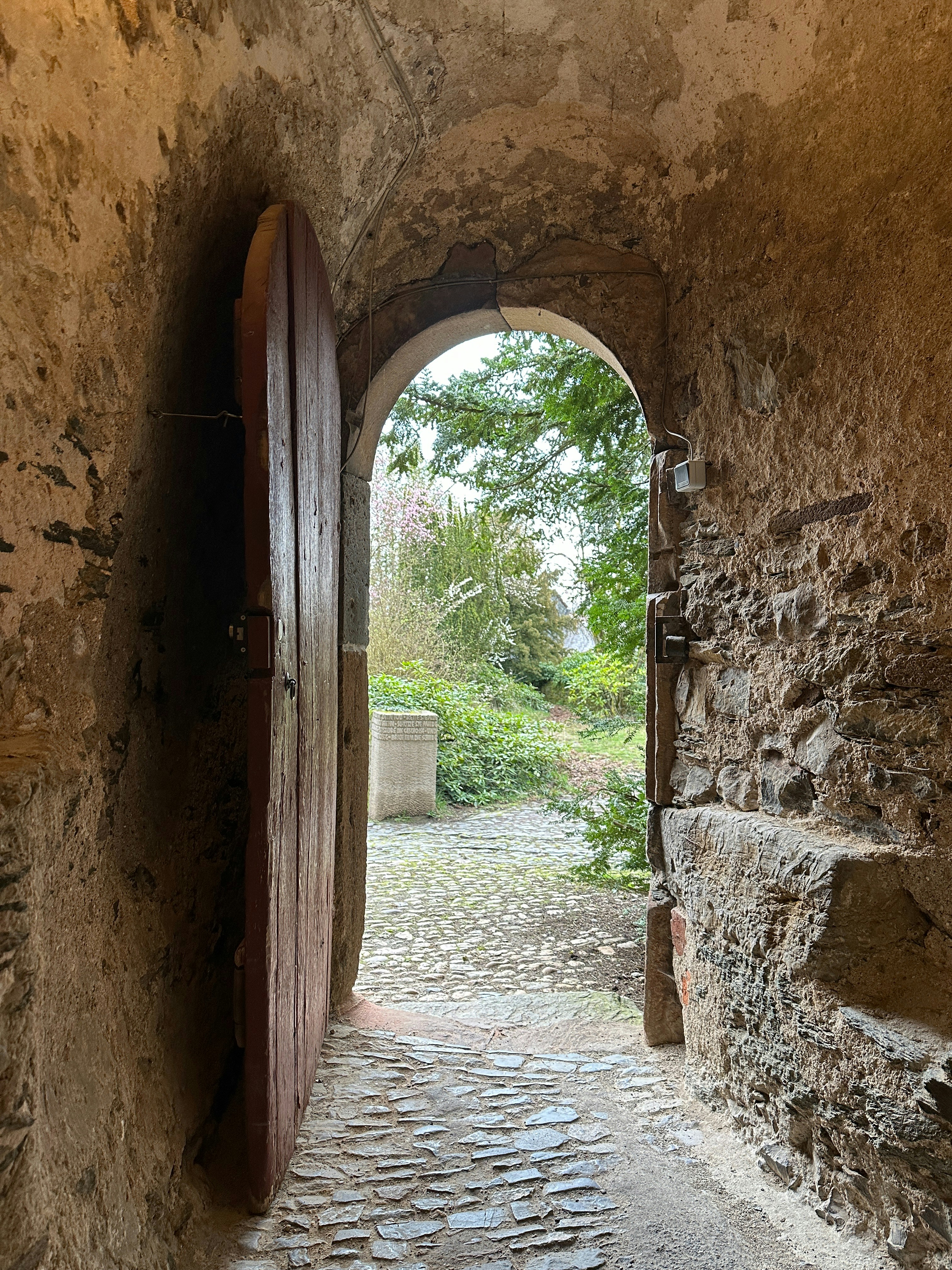
This past Sunday in the atrium, six-year-old G. was working with the sayings of Jesus from the Sermon on the Mount again. “Knock and the door will be opened to you,” he read.
“I wonder what that could mean?” asked my fellow catechist.
“Hmmm,” said G. “Maybe it is the door to the Parousia.”
This child never ceases to stun me with his fresh takes on, well, just about everything.
If we knock, if we ask, if we seek, will we be able to glimpse the Parousia? The dream of God for our world realized? The fullness of the Kingdom of God alive in our midst? It has struck me in recent weeks that Jesus wanted nothing more than to open the door to the Parousia for people. Like the prophets before him, he was constantly preaching: The Kingdom of God is like this. The Kingdom of God is like that. But sometimes words were not enough for Jesus, and to open the door to the Parousia for people, he would give them a physical sign of the future God had planned in which every tear would be wiped away and the blind would see and the deaf would hear and those who were lame would leap like a stag. In short, he would give them a miracle.
I acknowledge this is not the way I grew up thinking of miracles. I tended to think of miracles as God intervening in the ordinary laws of nature to fix a particular problem… an act of mercy for a particular person who asked enough times. Or maybe something Jesus would do to prove he was God and that people should take him more seriously. But I think that understanding miracles this way can lead us down some less than helpful paths theologically. Better to think of miracles as doors to the Parousia…glimpses of what God dreams for our whole earth.
Which doesn’t mean miracles are a permanent fix. It is not like Lazarus or the Widow of Nain’s son or Jairus’ daughter did not die again. We don’t know that Bartimaeus had 20/20 vision for the rest of his life, or that the woman with a hemorrhage never again bled, or that the paralyzed man lowered through the roof never broke another bone. What we know is that for a moment in time (and we don’t know how long), they became signs of the Kingdom of God for the rest of us. They gave us hope and wonder and nourished our faith. Not because they were holier than anyone else or did anything to merit it, but because for a little while at least we could look through them like a doorway.
Of late, I’ve been pondering what that was like to be Bartimaeus or Jairus’ daughter or the man with the withered hand. On one hand, Bartimaeus asked to see. But Jairus’ daughter surely didn’t ask to come back from the dead. And the man with the withered hand was simply attending synagogue one Sabbath when he got stuck in the middle of a debate between Jesus and the Pharisees. What was it like to realize that, yes, this moment surely was to your temporary benefit, but that you yourself were a bit player in a grand drama. Indeed, in most of the miracle stories we hear little from those who have been healed of illness or restored to life. Their lives were never meant to be the center of the story for long. They were a sign.
Am I myself open to that role? I have been so moved for months now by people who’ve told me, “I am praying every day to God for you. I am asking for a miracle.” And I’ve been wondering in my case what a miracle might look like. In the beginning, I was thinking of miracles as something very rare, permanent, and belonging only to those of extraordinary faith, which I’ve never seen myself as possessing. But slowly, I’ve begun to see miracles as “for the moment,” as more dependent on God’s goodness than our own strength of belief, and—dare I say—perhaps even more ordinary…if we are open to looking at life through G.’s lens.
For several months now, I’ve been feeling pretty normal. I have a low blood count and have had to delay my next round of chemo to try to get the numbers back up. But if you met me, you wouldn’t know that. And if my doctor hadn’t told me, I wouldn’t know that. I feel good. I still have indications of cancer in my brain, but like Peter’s mother I’m up out of bed and able to cook. I’ve found myself still thinking, “This doesn’t count as a miracle.” Yet gradually I’m coming to realize that whether it gets classified as a miracle or not depends more on whether I am open to understanding this moment of life as a glimpse of the Parousia...for myself and for others. That this moment—marked as it is by wholeness, surrounded as it is by love, permeated as it is by joy—can serve as a sign of what God dreams for us as humans.
And then I begin to wonder whether “becoming a miracle” is not something each of us might be called to at various times in our life. Maybe many times. Maybe daily. Maybe as a way of being in the world. We knock and find the door swings open. The Kingdom of God wants to be in our midst in us.
+++++++++
My preaching for this week (May 4) is about calling on the Holy Spirit to help us remember what we are in danger of forgetting about our faith all of the time. (Or at least what I am in danger of forgetting.) You can find it here.
Photo credit: Wald Creations (Unsplash)