Image
As a child I loved Easter. There were jellybeans and chocolate bunnies and bright banners at Church which would be attended by me and my mom wearing flower corsages pinned on by my father. Not even sure they make those anymore. But the point is that Easter was a bright, sugary, joyous day. And I do mean day. I wasn’t aware that Easter was a whole season and would have had no understanding as to why the Church would have wanted to celebrate it longer than that. I mean how much could there to be to ponder about someone rising from the dead?
Sooo. I was very wrong about that. I’m in my 50’s now and it turns out there is quite a bit to ponder about someone rising from the dead. And that the mystery itself isn’t necessarily one that fills a person with bright, sugary joy, but sometimes confusion, even alarm. Which is why now I am appreciative that one of the Gospel readings the Church proposes for Easter morning each and every year is John 20:1-9, the passage about the discovery of the empty tomb where no one seems to know anything about what is going on.
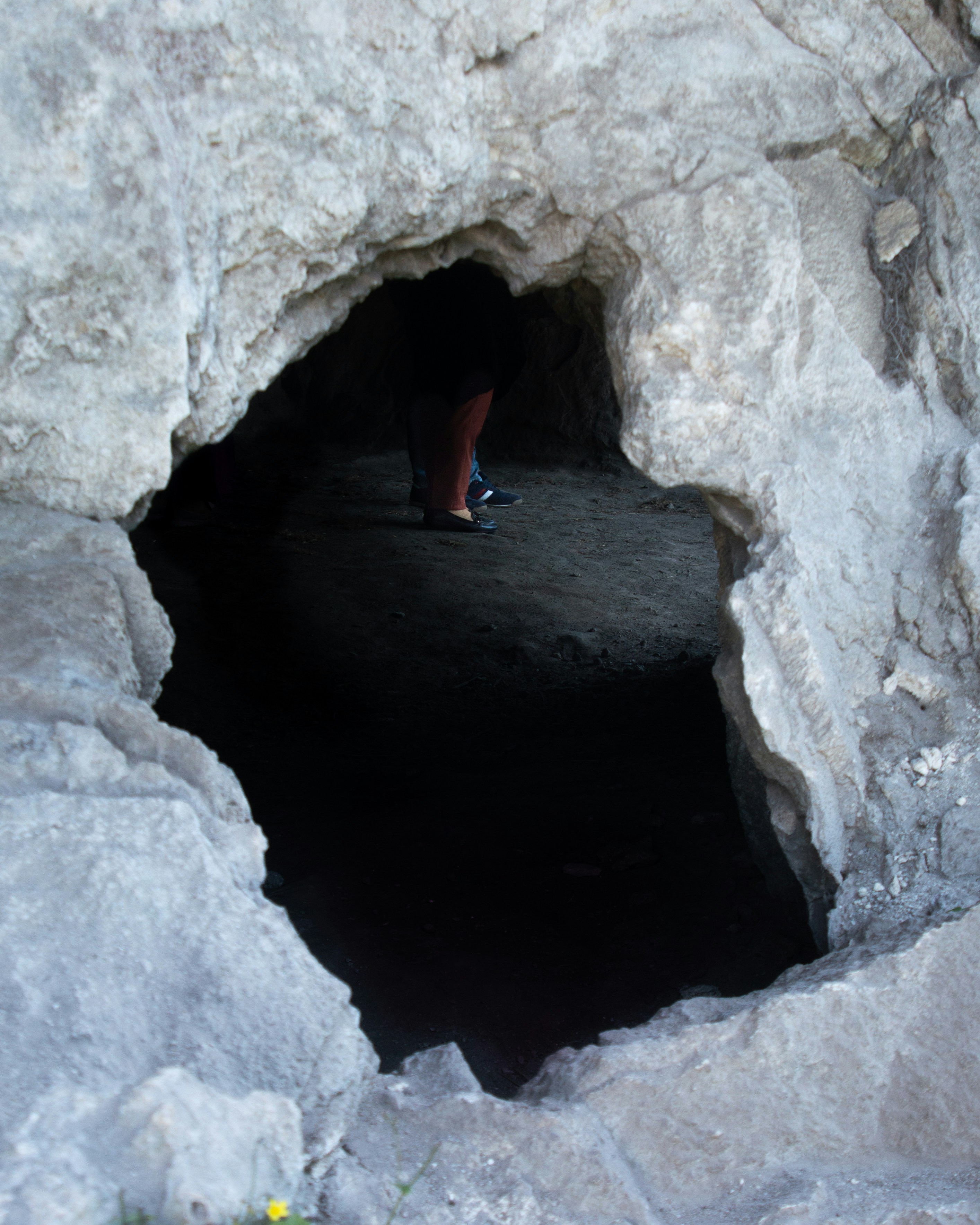
Mary of Magdala arrives at the tomb in darkness. Perhaps a reference to the time of day, but also a reference to the state of her spirit. The Greek word for tomb mnēmeion comes from the same Greek word as “memory.” So, when Mary exclaims, “They have taken the Lord from the tomb!” it is almost as if she is saying, “They have taken the Lord from my memory!” What has a friend left to hold onto? This is how lost and confused she feels on Easter morn. Nothing bright or sugary about finding him missing.
Peter and the other mysterious beloved disciple race to the tomb at different paces to see what Mary is talking about, with Mary apparently running back behind them. Why do we need to know who gets their first? What is the point? Scripture scholars can’t quite figure it out. Jesus’ clothing is there, arranged in an orderly fashion. But other than a suggestion that whoever snatched him knows how to fold their laundry, what is the point of including this? Again, scripture scholars themselves aren’t totally sure. They have some hypothesis but no agreement. The Gospel then mentions that when the beloved disciple spotted Jesus’ garments, he not only saw but “believed.” Believed what? That Mary was right and Jesus’ body was truly missing? Or something more? Scholars continue to find themselves in the dark.
If we were to add one more verse (vs. 10) to today’s reading before the lectionary cuts it off we would hear, “Then the disciples returned home.” They simply go back where they came from. Except that that isn’t quite what the Greek says. It says they returned pros heautous which can be a reference to their homes but literally means “to themselves.” As in, they returned to themselves. They returned inward. They returned to pondering. They were still in darkness.
John’s Gospel seems to highlight that Easter for Jesus’ friends was not immediately jellybeans and joy. But it also was not a day. It was the beginning of a whole season of slowly trying to make sense as events would continue to unfold… for weeks, indeed we might even say for lifetimes. And resurrection was just one of the ways that his friends found to describe what had occurred. As Brian Schmisek points out in his fascinating short book, Resurrection of the Flesh or Resurrection from the Dead, Paul often uses the language of Jesus coming to sit at God’s right hand or being glorified or entering into His glory. Elsewhere John talks about Jesus being exalted or lifted up or “going to the Father.” What happens to Jesus after death in the New Testament is a complicated matter.
I mention all this not to say that we shouldn’t love Easter and eat our fill of jellybeans. (I’ve already begun) But just because many of us enter the feast this year (maybe every year) like Mary of Magdala—still in the darkness. We come feeling loss in the face of death and confusion in the face of what to make of the world and a few tears about what is to come of us as we age and battle illness. What is it really like to die? To be dead? What’s on the other side?
We still greet Easter Sunday with joy and hope. We enjoy watching the over-sugared children running between the pews at Mass. But there is a chance that we also come to Easter Sunday with some ongoing doubt and confusion and fear. The closer we are in any given year to the real mystery that is death, the more that is likely the case.
And that is okay. Death is as complicated as life itself. Maybe more so. Easter Sunday morning lifts up the core mystery of our faith, but it doesn’t solve it. Today is the beginning of a whole season. And the invitation of God to each of us is to enter the tomb this day and not worry we are lacking faith because we don’t have all the answers. Adventure awaits us in the coming 40 days. Perhaps longer, for 40 itself is but a metaphor for the amount of time it takes for real change to happen, real insight to be grasped. But if we hang in there with Mary, Peter, and the Beloved Disciple, we are promised it will still be grasped.
In the words of the Welsh poet and clergyman, R.S. Thomas,
“There have been times
when, after long on my knees
in a cold chancel, a stone has rolled
from my mind, and I have looked
in and seen the old questions lie
folded and in a place
by themselves, like the piled
graveclothes of love’s risen body.”
Wishing you a beautiful Easter morning, and even more, a beautiful Easter season.
++++++++++++
Note: A variation of this reflection was preached for the Dominican website WORD.OP.org this morning.
Photo credit: Emre Gunduz (Unsplash)
Poem footnote: R.S. Thomas, Poems of R.S. Thomas (Fayetteville: University of Arkansas Press, 1985), 128. Whole poem can be found at Journey with Jesus: https://www.journeywithjesus.net/poemsandprayers/1736-the-answer