Image
It is a new year! Now granted I slept through its arrival, as I’m guessing many of you did, too. Sometimes staying up to midnight just feels like an unreasonable ask these days. But it is a new year nonetheless, and even though it comes without one freaking clue as to how exactly it is going to unfold, there is something beautiful to savor in the newness itself. The “let’s try to jumpstart this engine over again” sentiment. Or the “let’s make a new resolution” decision. Or as my niece taught me, based on Krista Tippett’s recent TED talk, “let’s ask a new question” time of year.
For me, one of the gifts of 2025 was coming to greater clarity around what I’m called to do with my time on Planet Earth. As many of you know, I probably had a few too many pots on the fire before the emergency craniotomy in October…a few too many projects I was passionate about. There were sparks flying everywhere atop that stove. And even after the surgery, for a couple of weeks, I think I believed I’d just have to turn down the burners for a bit but could keep everything cooking. Now, of course, it is clear to me that there are lots of pots I’m unable to continue stirring. I’m sooo grateful for those who’ve stepped in to keep those projects sizzling without me, and I believe they are actually going to turn out all the better for having a new chef. But there are a few pots that, while I have had to turn the heat down to simmer, still feel like things I should be tending to for as long as I can.
One is a very large stockpot boiling down the massive topic of truth and why it is important. Working within the Christian tradition, I hear us using the word a whole lot but without much thought about what the term itself means. We say Christ is the Truth but without any understanding of what it is we are communicating about Christ in that sentence. We say “the true teaching of the church is…” but are only concerned about what comes after that ellipsis and not before. The problem is if you just so happen to live in a society that doesn’t have a shared definition of the word “truth” or “true” it erases whatever it is you were trying to communicate in the first place. You may as well say that Christ is ghystghrty or that the teaching of the church is trnsmlkyhlku. This is why arguments about truth in a society need to be framed not as “political issues” but as issues critical to faith. And it is one of the reasons why it befuddles me so deeply that Christian leaders have not been more outspoken around the ever-changing definition of the word “truth” in contemporary society.
Traditionally, the pursuit of truth had to do with trying to figure out what was real… attempting to have a more accurate picture of the world in one’s mind. The speaking of truth had to do with being honest… saying only things one believed, but things that one had first sought to make sure were accurate before saying them aloud. And “being true” had to do with fidelity to another… wanting the best for the other person and helping the other person to be their best self.
Currently in U.S. society, the pursuit of truth appears to instead be whatever the person talking wants reality to be. Honesty has nothing to do with it. And we are expected to be not faithful but loyal… supporting whatever the person says or does whether it is helping them be a better person or not.
Given the ancient roots of truth as a value in the Christian tradition, you would think that the more one loved tradition in the Church, the more outspoken one would become in this moment in time. Maybe the more homilies we would hear about why honesty matters. Why fidelity, not loyalty is a virtue. And why we have such a robust tradition of valuing reason and the sciences. Not necessarily a perfect tradition. Took us a long time to apologize to Galileo after all. But certainly a strong tradition, including such greats as Fr. Gregor Mendel (discoverer of genetics) or Fr. Georges Lemaitre (proposer of the Big Bang theory). You could go back further to St. Albert the Great (Aquinas’ mentor) or Bl. Nicolas Steno (geology genius). You could indeed extend the connection all the way back to the Magi who we have just marked again on this past Sunday’s celebration of Epiphany—those early astronomers whose study of the skies led them to the manger where Jesus lay. But the pulpits have not had much to say about the importance as a Christian of making sure one’s mind is always aligned with reality.
There has been a lot of speaking about particular truths we hold as Christians of late, and many of them have been very good and much needed. The U.S. Catholic bishops put out a significant video and message about care and compassion for immigrants. This is important. One of the challenges is that there are so many violations of Christian values clamoring for our attention right now—all of which need speaking up about—that it is impossible for everyone to take responsibility for all of them. But the one pot on the fire that I feel particularly called to continue to stir and turn up the heat on is the pot of truth, in good part because I don’t sense that discussions on any of our other issues—like immigration, or abortion, or climate care, etc.—are going to be managed well unless grounded first in a commitment to pursue what is true…what is accurate information.
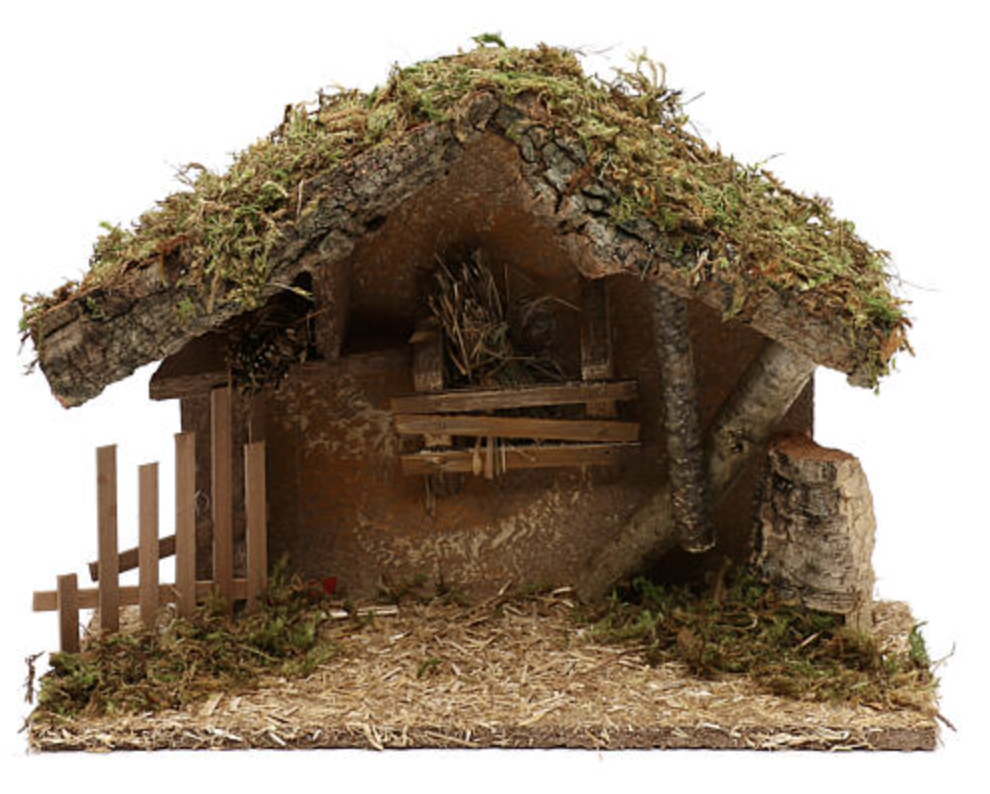
Over the Christmas season, a number of congregations courageously placed creches out front missing Jesus, Mary, and Joseph because they had been taken away by ICE. It was a powerful message that drew a good deal of attention. I wonder what would happen if this Epiphany, we acknowledged that the magi—those ancient truth seekers—are also now missing from the scene. Our current administration has cut funding for scientific research of all kinds, including that needed to heal cancer and track climate changes. It has fired scientists who are committed to getting a more accurate view of reality and hired those who are loyal rather than faithful. We can no longer turn to sites like the CDC and trust that we are getting information pursued by genuine researchers. The good news is that the star is still there in 2026. The hard news is that we need to find more folks committed to look for it.
For the past year, I’ve been slowly working with a couple of colleagues to build an ecumenical, possibly interfaith, website for preachers and other faith-based communicators committed to speaking frequently about the importance of truth. I’m sharing here a couple of sample Epiphany preachings:
- Observe the Star Rising
- Pulled from Fear to Truth (featured on site but originally from Word on Fire)
But if you have heard (or better yet, written) another one that you’d be willing to share with me (in text form or a weblink), we are ready to finally start expanding the page with other samples. I’m also linking to a chapter I wrote earlier in the book Let’s Talk About Truth (Ave Maria Press, 2020) that particularly has to do with truth as the pursuit of a more accurate picture of reality. If you’d not read it before, I think you’d find it interesting and valuable in this moment.
Thank you in advance for helping me to continue to stir this pot in 2026!
++++++++++++++++
Health Update: Still doing really well! Finished radiation and chemo on Dec. 23rd and now waiting to I find out when chemo starts up again. Probably sometime later this month when my immune system is a little stronger. Have another MRI scheduled for early February, at which point we’ll find out how effective the radiation and chemo were on the area of my brain affected by cancer. Prayers during this period continue to be most welcome.